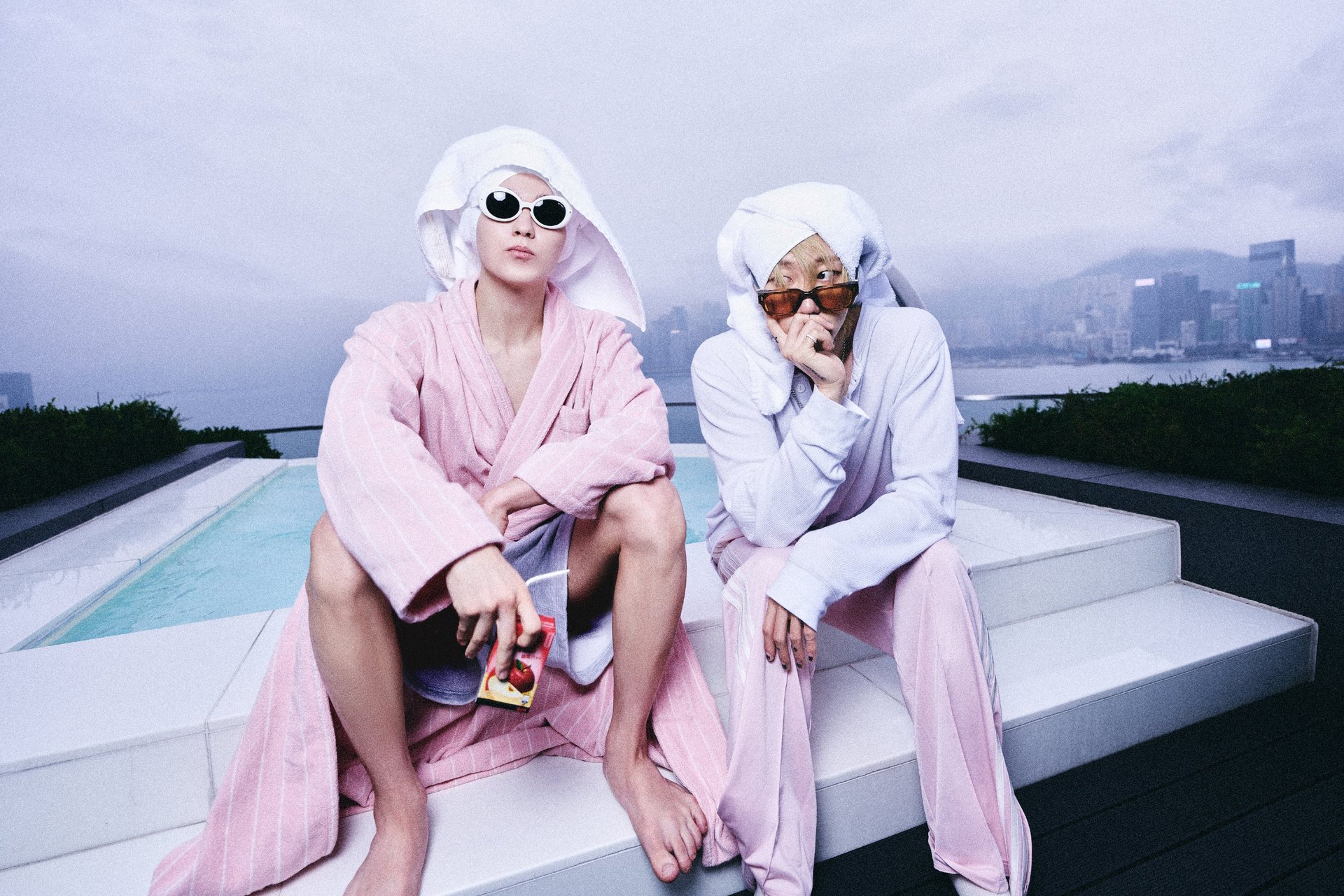
In 2015, a boy group was preparing to debut. Thirteen members, and an agency so cash-strapped it could barely afford in-ear monitors. The industry was skeptical. “Thirteen members will only scatter the public’s attention and make profit-sharing harder” — that was the conventional wisdom at the time. Nobody expected this group would become one of the biggest bands in the world a decade later.
About ten years later, in 2024, that same group ranked third on the IFPI Global Artist Chart — behind only Taylor Swift and Drake, the highest placement ever for a K-pop act. Their 2023 EP FML sold 6.4 million copies worldwide to top that year’s IFPI Global Album Chart, and in June 2024 they became the first K-pop group to play the main Pyramid Stage at the UK’s Glastonbury Festival. The story of SEVENTEEN is a record of how everything once flagged as a weakness became a weapon.
1. Writing and Choreographing It Themselves: The Self-Producing Identity
The first word that defines SEVENTEEN is “self-producing idol.” It means that rather than relying entirely on agency-imposed concepts or outside composers, the members have led the songwriting, composing, and choreography since the very start of their career. At the center of it is WOOZI, leader of the vocal team and the group’s main producer. According to Billboard’s 2025 Billboard K-Pop Artist 100, as of April 2025 WOOZI had 228 works registered with the Korea Music Copyright Association (KOMCA), and he has contributed as a writer or composer to more than 80% of the group’s discography.
This system goes beyond simple self-sufficiency. Because the member who best understands each of the thirteen voices and their strengths handles part distribution and vocal directing himself, the group can finely control the musical scatter that large lineups easily fall into. Fans call this effect the “WOOZI buff.” WOOZI has collaborated for over a decade with co-producer BUMZU, whom he met in high school, and in 2024 he made his stance clear on Instagram — “all of SEVENTEEN’s music is written and composed by human creators” — defending human artistry in the age of generative AI.
The breadth of genre is another product of the self-producing system. From the bright funk-pop of their early days (“Adore U,” “Very Nice”) to intense hip-hop (“HOT”), soul-funk (“God of Music”), dark R&B dance (“MAESTRO”), and stadium-sized rock anthems (“Thunder”) — SEVENTEEN has never settled on a single sound. As WOOZI put it in an interview, they “follow the message, not the trend.”
2. Architecture Built by Thirteen: Choreography as a Genre
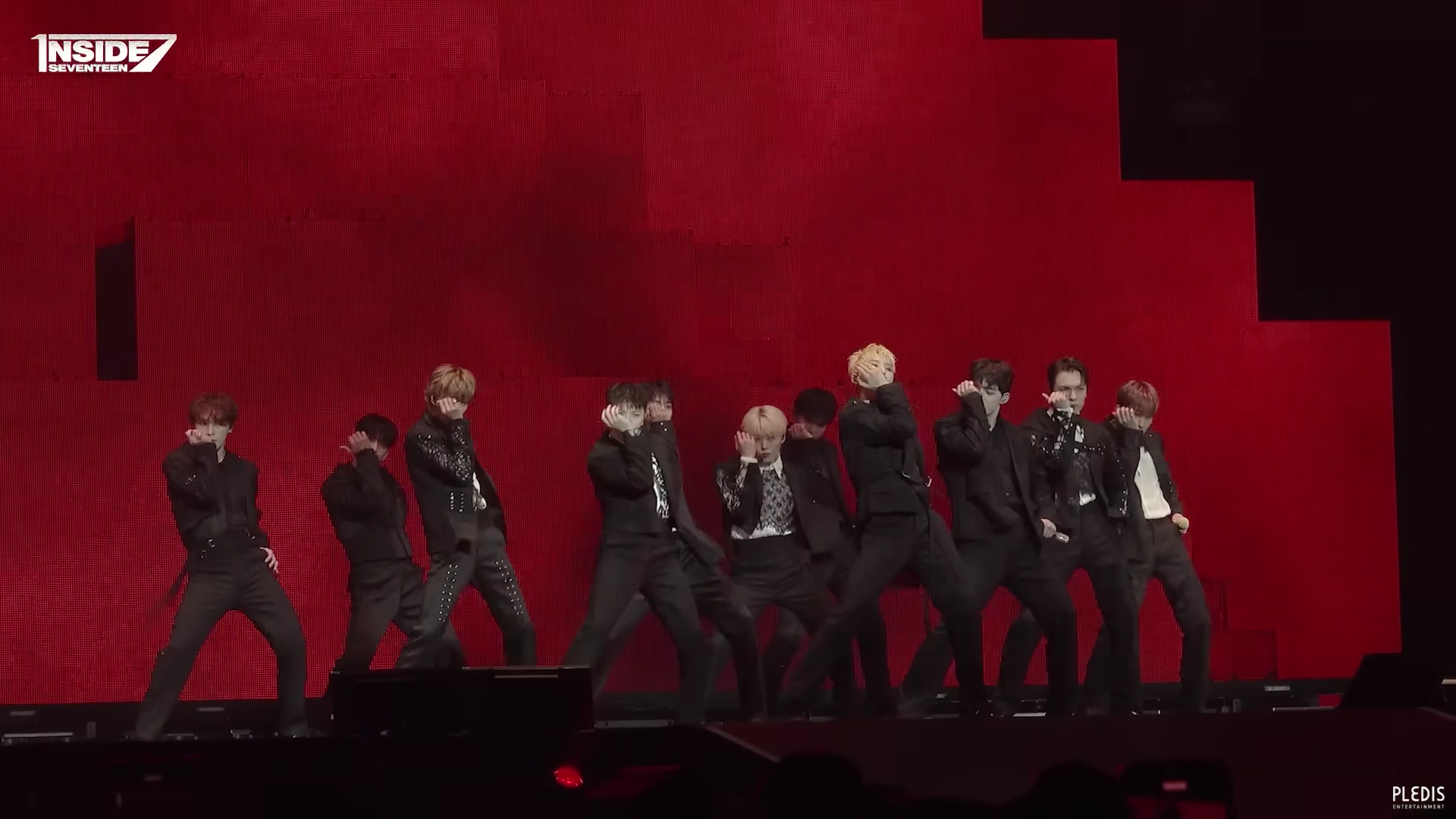
SEVENTEEN’s second weapon is performance. Korean and international media call them a “Performance Powerhouse” and the “Kings of Synchronization.” It’s not merely about matching moves; staging three-dimensional structures with thirteen bodies is SEVENTEEN’s own grammar. Scenes where members use one another’s bodies as supports — collapsing like dominoes or interlocking like gears — are a spectacle only a large group can pull off.
The framework that sustains this scale is the three-unit system. The division into a hip-hop team (S.Coups, Wonwoo, Mingyu, Vernon), a vocal team (WOOZI, Jeonghan, Joshua, DK, Seungkwan), and a performance team (Hoshi, Jun, THE8, Dino) is even the origin of the group’s name — “13 members + 3 units + 1 team = 17.” Hoshi, the performance team leader who creates and directs much of the choreography himself, is a taekwondo black belt known for weaving meaning for CARAT (the fandom) into his choreography. What’s striking is that even members outside the performance team can lead the group dance — the whole lineup’s skill is that evenly leveled.
This capability shone brightest on large outdoor stages. In June 2024, SEVENTEEN became the first K-pop act to stand on the Pyramid Stage at the UK’s Glastonbury Festival, and the British music magazine NME gave the show a perfect score, saying they “made history in the face of prejudice.” That September, they headlined Lollapalooza Berlin as the first K-pop act to do so.
3. From Liability to Weapon: The Underdog Story
The standing SEVENTEEN enjoys rests on a growth story of breaking through harsh early conditions head-on. As mentioned, the scale of thirteen members was a target of skepticism at debut, and the agency’s financial trouble pushed the debut date back again and again. Instead of giving up, the members wrote their own songs and built their own choreography in the practice room. “Self-producing,” born as a means of survival, ultimately turned into a weapon that is hard to imitate.
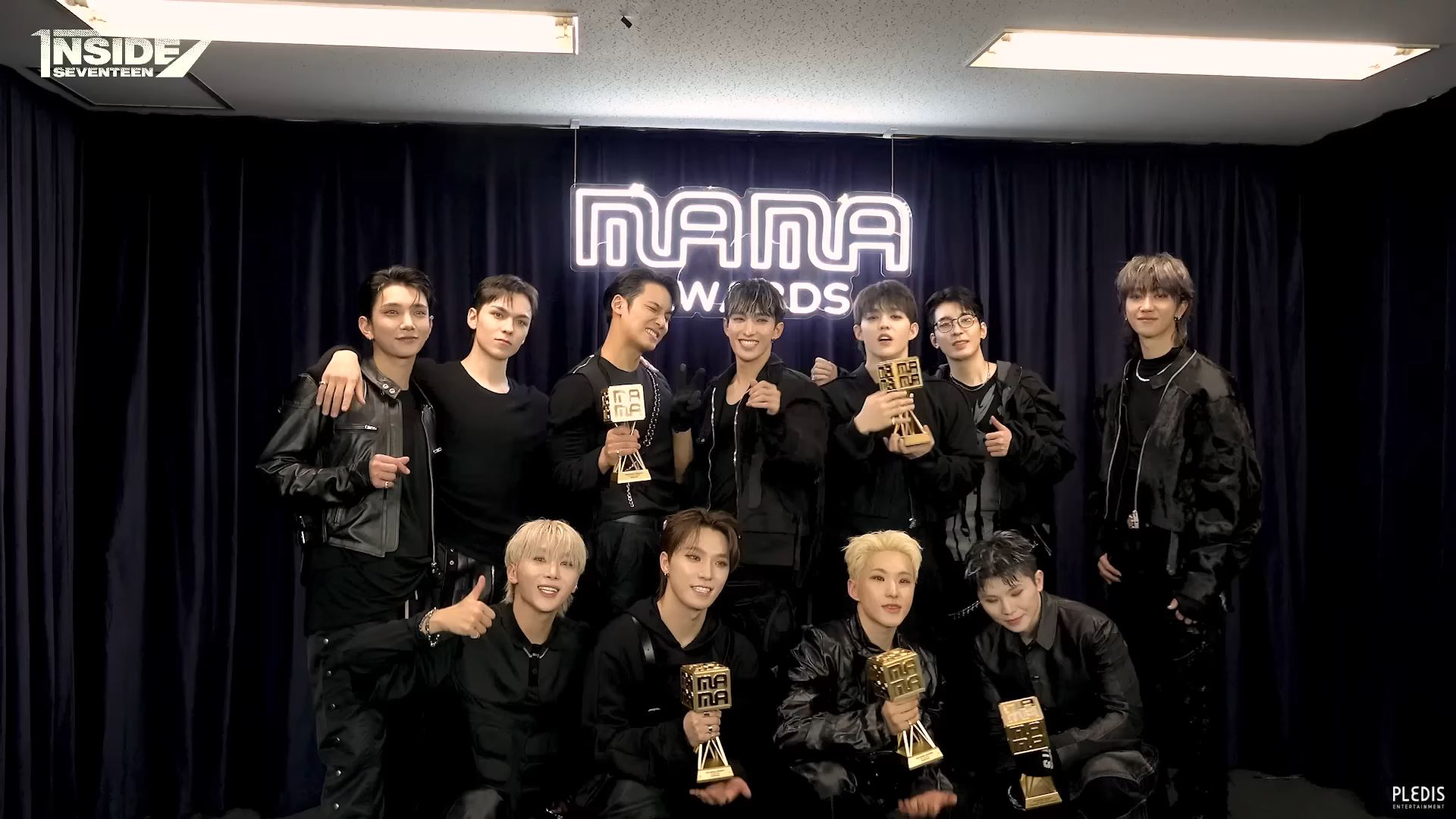
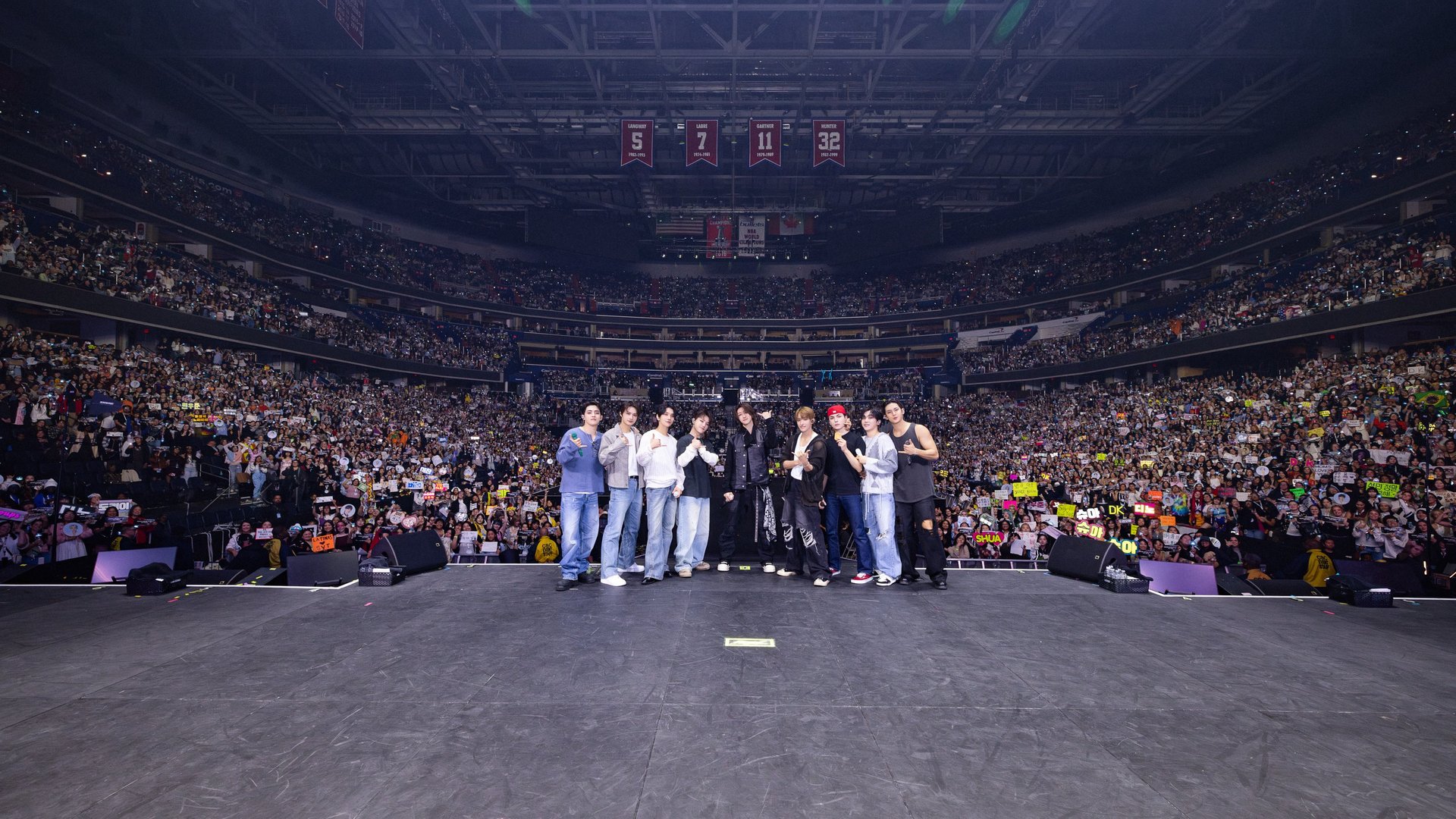
The turning-point numbers are clear. In 2020, their seventh EP Heng:garæ surpassed one million copies in its first week to become a million-seller, and in 2023 FML topped the IFPI Global Album Chart (6.4 million copies). Recognition beyond record sales followed. SEVENTEEN won the grand prize (Daesang) at the MAMA Awards two years running, in 2023 and 2024, and on June 26, 2024, they became the first K-pop act appointed UNESCO Goodwill Ambassadors for Youth, donating one million dollars to launch a program supporting youth projects worldwide. That same year, the group’s RIGHT HERE world tour drew about 1.037 million people across 30 shows in 14 cities — the group’s first time surpassing one million attendees — opening a stadium-tour era with their U.S. BMO Stadium stage.
SEVENTEEN also cleared the contract-renewal crisis that K-pop groups commonly face (the so-called “seven-year curse”) in the most complete way possible. After all thirteen members renewed early in 2021, in April 2026 — their eleventh year — all thirteen announced their renewal once again. Leader S.Coups declared at the Incheon encore concert that they would “row hard forward in the same boat.”
4. CARAT and CUBIC: Two Fandoms
SEVENTEEN’s fandom culture is an example of just how horizontal and creative the relationship between artist and fan can be. The official fandom name CARAT, coined in February 2016, carries the meaning that the carats (fans) raise and brighten the value of the diamond (SEVENTEEN). CARATs are an active fanbase that sees itself as a partner in the creative process — popularizing a “custom culture” of decorating the inside of the official light stick with cubic zirconia and figures.
Another name you can’t leave out when discussing SEVENTEEN’s fandom is “CUBIC.” As GOING SEVENTEEN, the self-produced web variety show launched in 2017, grew so popular, members of the public who aren’t core music fans but watch the content regularly began calling themselves Cubic. Dubbed “the Infinite Challenge of K-pop,” the show created a unique entry path in which web-content viewers naturally flow into the music fandom, and the agency and members alike welcome them by addressing CARAT and Cubic together.
SEVENTEEN’s narrative has been built alongside this fandom. The self-narrative of youth, growth, and solidarity that runs from their debut song “Adore U” is designed so that albums connect seamlessly (attacca), and the “SEVENTEEN ring” the members have shared since before debut is replaced with a new design with each studio album — a ritual marking the opening of a new chapter for the team.
The Current Chapter: Ten Years In, and a Hiatus That Never Stops
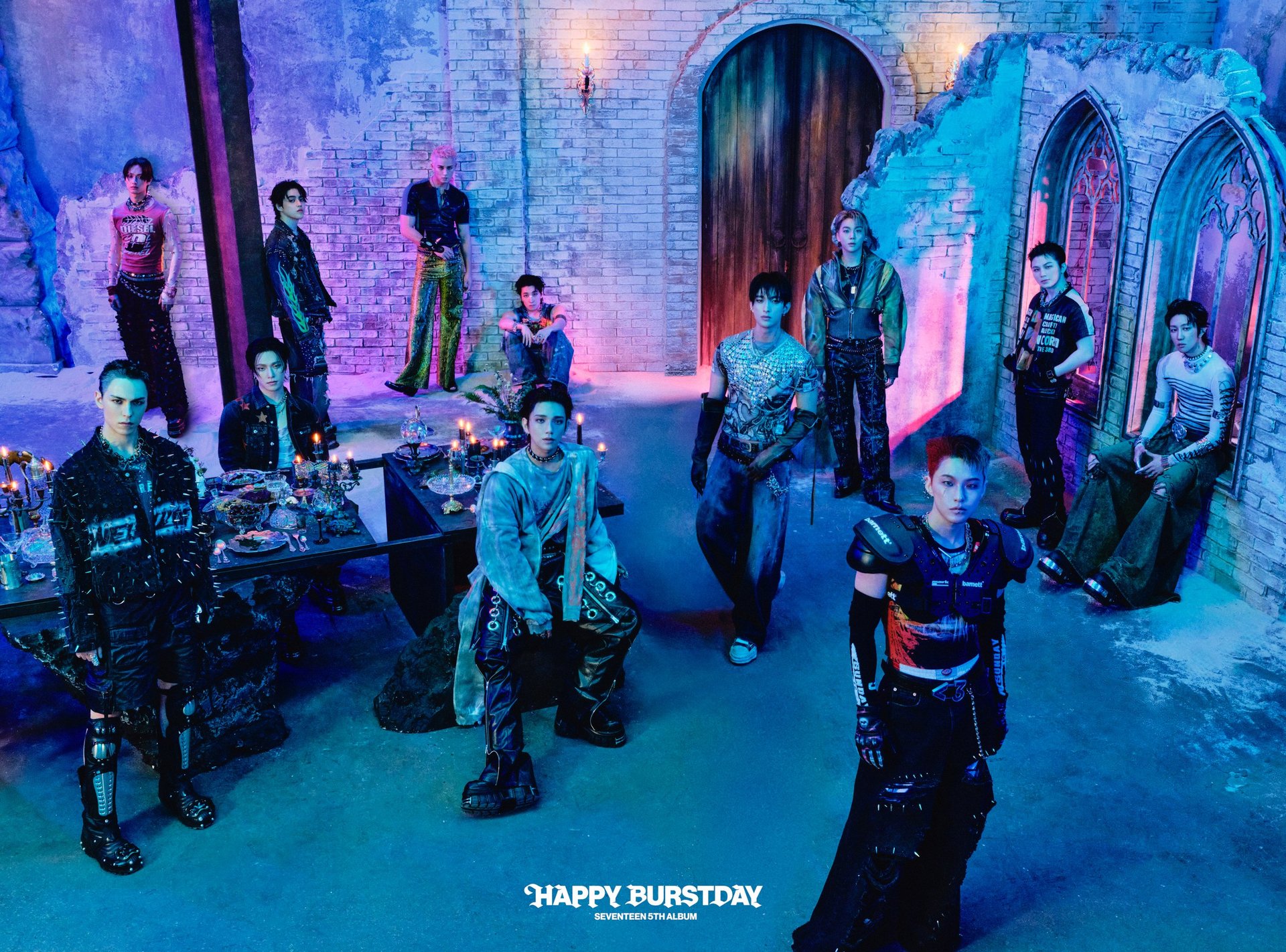
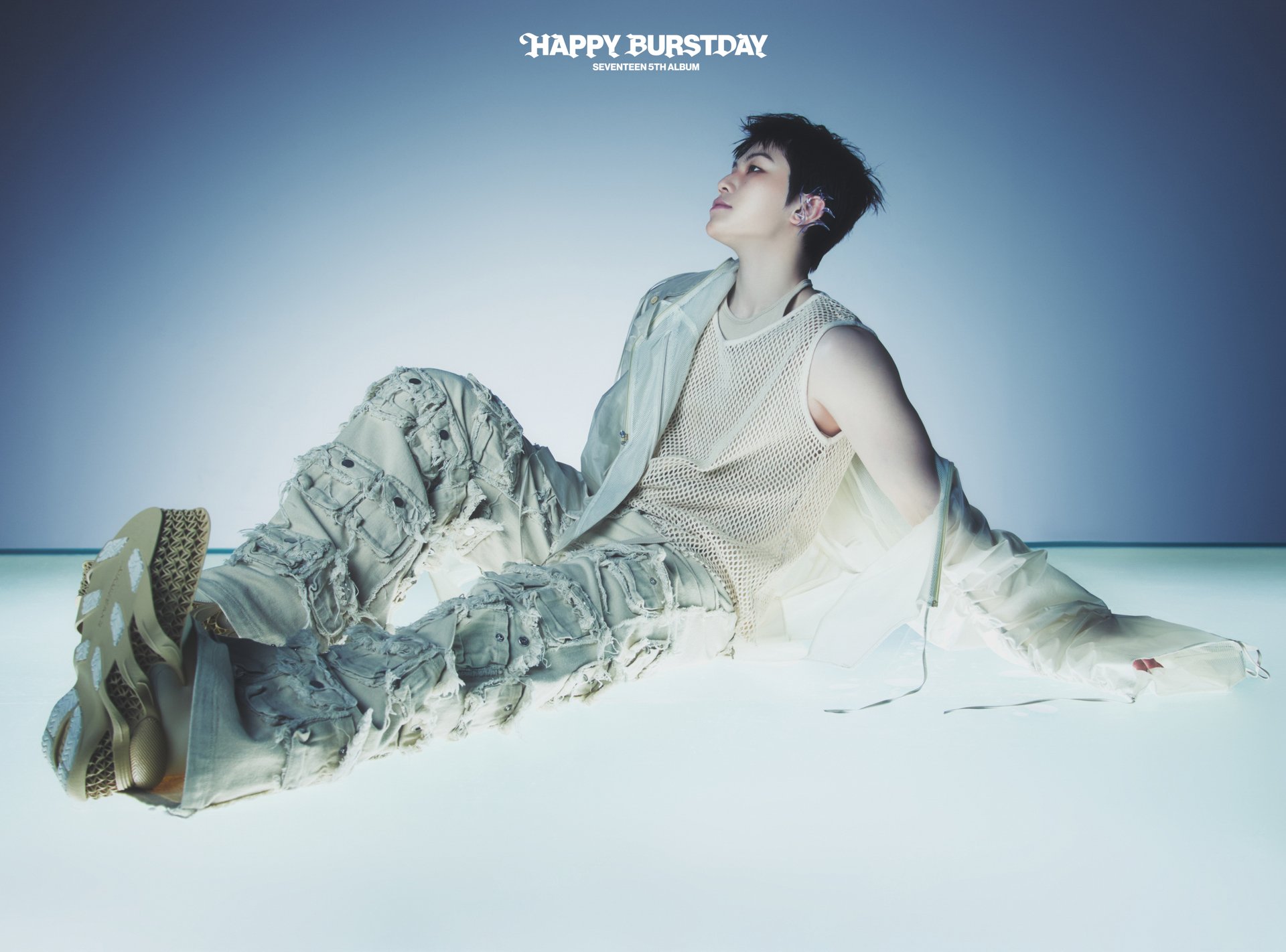
SEVENTEEN’s most recent full-group chapter was HAPPY BURSTDAY, the tenth-anniversary fifth studio album released in May 2025. Built around the concept of an “explosive rebirth,” the album packed in solo songs from all thirteen members, reached No. 2 on the Billboard 200, and recorded about 2.52 million copies on the Hanteo chart in its first week — proving once again the firepower of a group ten years into its career. And with that album as one peak, SEVENTEEN entered its so-called military-service hiatus as members fulfill their mandatory duty.
As of 2026, the members — apart from four exempted for reasons such as nationality and health (S.Coups, Joshua, Jun, THE8) — have enlisted in sequence, and on June 25 Jeonghan is set to be the first to complete his service. The goal for a full-group (OT13) return is 2028. A stretch when an ordinary group’s activity would stop, SEVENTEEN is filling without a gap through unit and solo work.
At the heart of it is V8, the new unit of THE8 and Vernon. This sixth unit, made up of the two of them, releases its first mini-album V8 on June 29, 2026. Under the theme of “spent youth,” the two members took part in writing and composing every track; the hyperpop-based title track “singasong” was co-produced with the European electronic producer Mechatok, while the B-side “girlsnboys” features Grammy winner Pharrell Williams. The fact that, even with the full group briefly scattered, the remaining members write and make the songs themselves — that is the most recent proof that, eleven years in, the self-producing identity hasn’t wavered.
Starting from a group whose very number was doubted, SEVENTEEN has reached a stage where each of those numbers has become a force that doesn’t stop. For fans trying to get SEVENTEEN’s discography — from HAPPY BURSTDAY to V8 — into their hands from abroad, Paysable Warehouse lets you gather multiple albums and receive them in a single delivery, even without a Korean address.