On August 19, 2006, five young men walked onto a stage in Seoul. By the standards an idol group was expected to meet at the time — a polished visual concept, choreography that locked together without a seam, songs handed to them by their label — BIGBANG was told they fell short on every count. They were also an unusual kind of team for that era: the entire process leading up to their debut had been broadcast as a survival documentary.
Exactly twenty years later, on August 19, 2026, BIGBANG releases a new digital single, “BiiiG,” on the very same date. Two days after that, they open a stadium world tour spanning 33 shows across 19 cities.
Everything that happened in between fits into one sentence. A team written off for not meeting the standard ended up being the one that changed the standard.
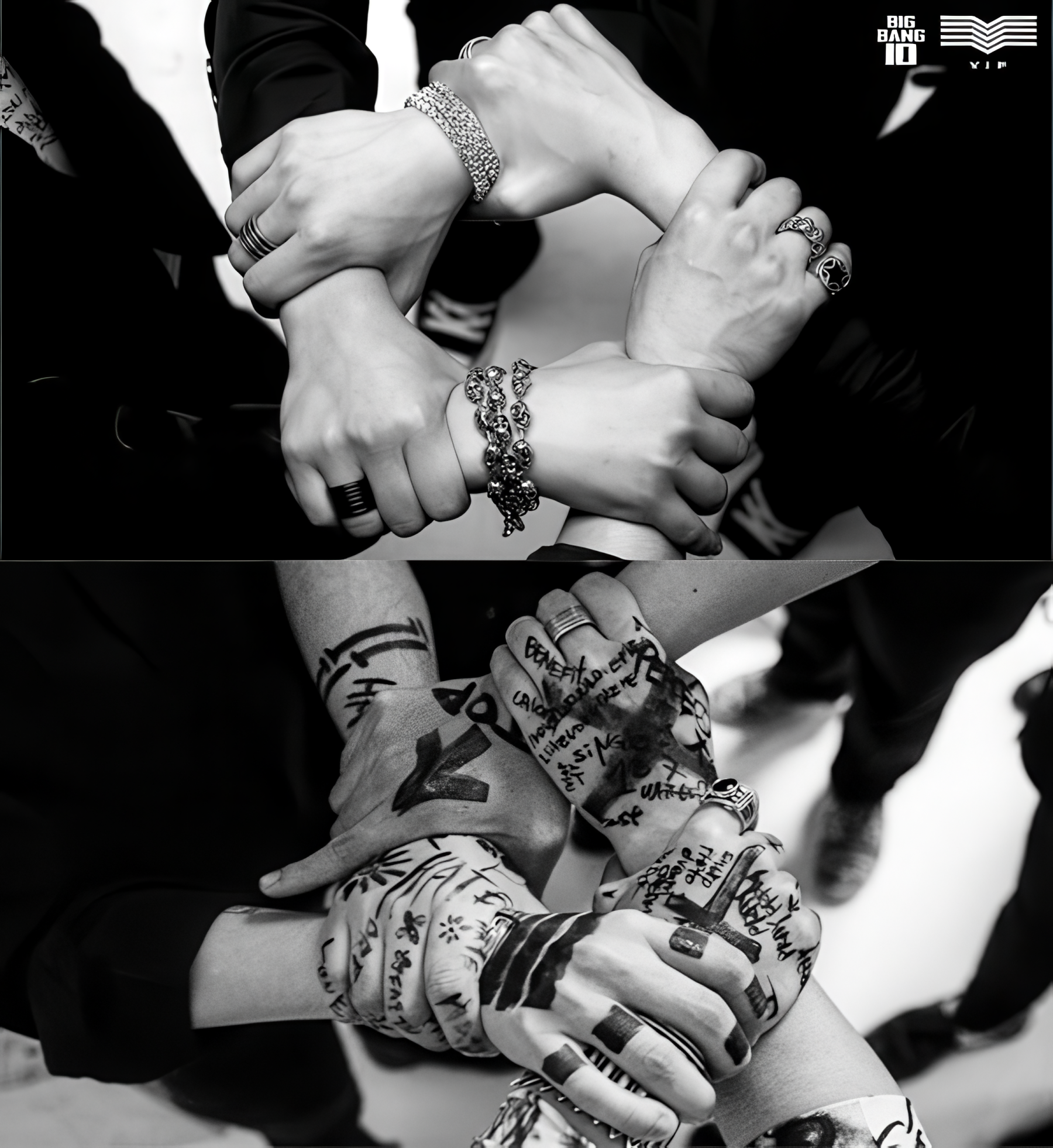
From Idols Who Received Songs to Idols Who Wrote Them
In the mid-2000s, the production model in K-pop was fairly clear. The label chose the song, added the choreography, designed the concept, and the artist delivered it. Within that structure, an idol’s ability was largely measured by how well they executed someone else’s plan.
This is the point where BIGBANG changed things.
The turning point was “Lies,” the title track from the 2007 mini album Always. Written and composed by leader G-DRAGON himself, it became the biggest hit of that year, and as “Last Farewell” and “Haru Haru” followed in succession, the group climbed into stardom. It was the moment the public confirmed on the charts that songwriting could be a survival tool for an idol rather than a bonus skill.
Their discography never settled into a single genre after that. Starting from hip-hop, they moved through electronic, R&B, ballads, and pop-rock, and by the 2015 MADE project, the alternative pop of “LOSER” and the aggressive synths of “BANG BANG BANG” coexisted on the same album. The reason one group could hold a spectrum that wide appears to be structural: the direction of a song could be decided inside the team.
The mark this approach left on later generations comes through most clearly in what younger artists say about them. On a 2023 talk show episode with TAEYANG, BTS’s SUGA said it “wouldn’t be an exaggeration to say that BIGBANG practically made BTS. You were musicians that I aspired to be like as a kid.” His bandmate JIMIN has said that “Taeyang sunbaenim is like an idol to me.”
Groups that put self-production front and center are not rare today. That is exactly why it is easy to overlook — the model was not obvious from the start. Before a group like SEVENTEEN, where members handle production themselves, could be taken for granted, someone had to prove it worked.
On Stage, and Beyond It
The word “knife-like precision,” the phrase Korean audiences use for perfectly synchronized choreography, almost never comes up when people describe BIGBANG’s performances. Instead of matching every movement exactly, five members chose to occupy the stage each in their own way. At the time this read closer to a weakness, but it ended up widening the range of what a K-pop stage could look like.
The scale of their tours is one indicator that the approach worked.
Table 1. BIGBANG’s major world tours
| Tour | Scale | Attendance |
|---|---|---|
| Alive Galaxy Tour (2012-2013) | 48 shows, 21 cities, 12 countries | Approx. 800,000 |
| MADE World Tour (2015-2016) | 66 shows, 32 cities, 13 countries | Approx. 1.5 million |
| Japan dome tours (2012-2017, cumulative) | — | 4,205,500 |
The 1.5 million figure from the MADE World Tour was the largest single tour ever run by a Korean act at that point. In Japan, from their first dome show through their final dome tour, cumulative attendance passed 4.2 million — a foreign artist filling Japanese domes repeatedly over that span is not a common record.
They left one mark in the United States as well. In 2012, the mini album Alive entered the Billboard 200 at No. 150, making it the first Korean-language K-pop album to appear on that chart. The ranking looks modest by today’s standards, but at the time there was no precedent for a K-pop album entering a main American chart at all.
Their influence outside the stage deserves attention too. They pulled high-end fashion labels into their stage wardrobes, and G-DRAGON later secured an independent position within the fashion industry through his own brand, PEACEMINUSONE. The arrangement in which an idol becomes a collaborator rather than a consumer of a brand was built during this period.
You can read traces of that lineage in the stage grammar of the groups that followed at the same label — TREASURE and BABYMONSTER.
The Fandom That Named Itself
BIGBANG’s fandom name, V.I.P, comes from a track on the single BigBang is V.I.P, released in September 2006. The fandom had a name barely a month after debut — and yet the thing this group left behind in fandom culture that spread the furthest is something else.
It is the yellow crown-shaped lightstick, known as the “Bangbong.”
Until then, concert cheering tools were mostly balloons in a group’s signature color or glow sticks that all looked much alike. The crown-shaped lightstick, which G-DRAGON helped design, became the first official cheering object in K-pop to carry a shape unique to a single group. Today almost every group has its own lightstick, and it functions as part of the show’s staging. This is where that started.
That crown carries into its twentieth year. The new lightstick released for the anniversary, the Light Stick 20th Anniversary Edition, carries a symbol combining a “B” shaped like a treble clef, the number “20,” and a repeat sign. The choice to include a repeat mark reads alongside the present moment — closing twenty years and opening them again.
There is one recent indicator of how long this fandom has stayed. On May 18, 2026, BIGBANG opened recruitment for the sixth generation of its official fan club, V.I.P. The fifth generation had been recruited in 2015, making this the first in eleven years. For much of that stretch, the group was not active together.
The numbers leave traces too. The music video for “BANG BANG BANG,” released in 2015, passed 800 million views on YouTube in September 2025 — the first music video by a second-generation K-pop group to do so. On Spotify, as of August 2026, they register roughly 5.5 million monthly listeners and about 6.7 million followers. Their top listening cities run Kuala Lumpur, Singapore, Ho Chi Minh City, Seoul, and Hanoi, which suggests a listener base centered on Southeast Asia held steady even through the quieter years.
The Day It Becomes Twenty Years
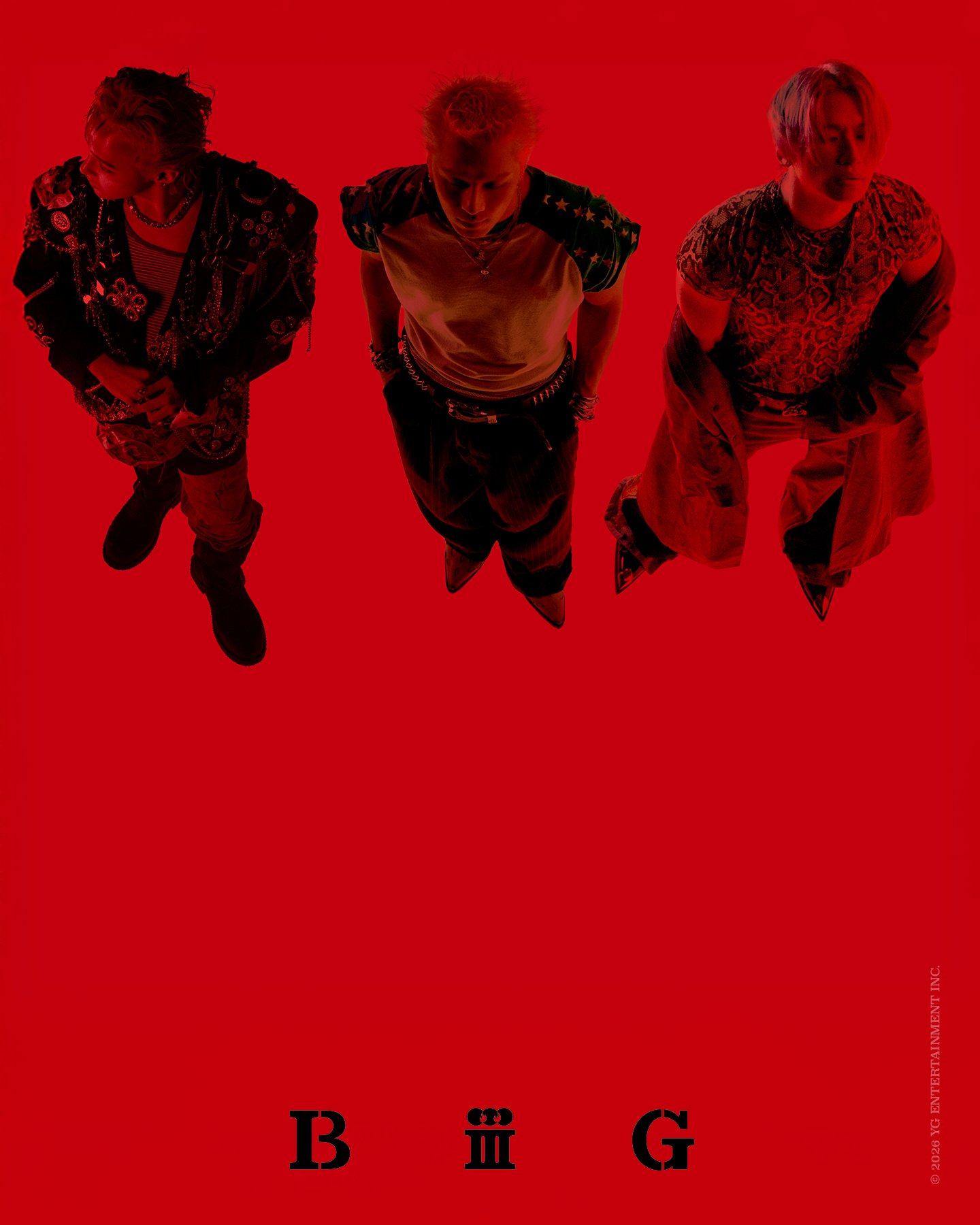
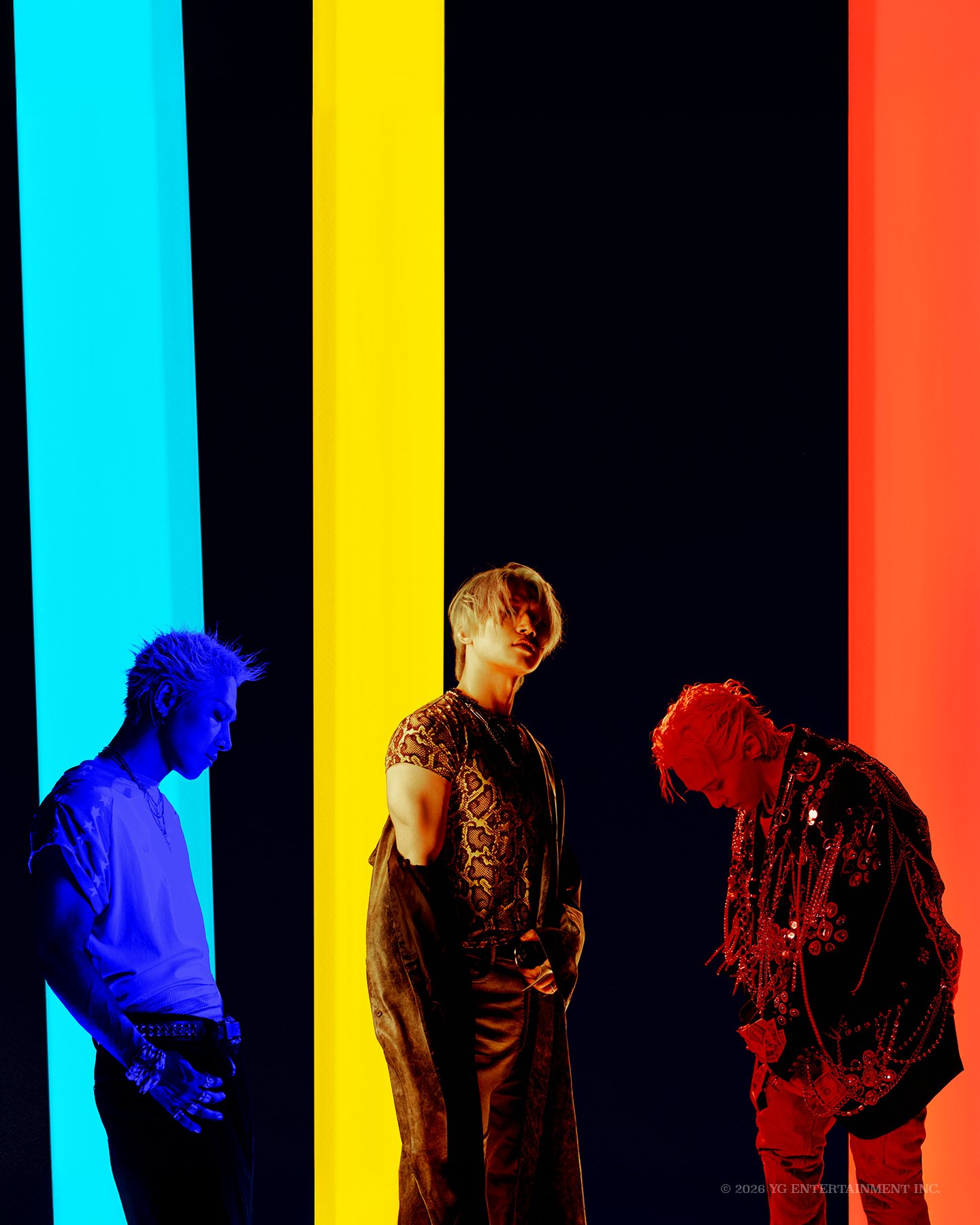
In April 2026, BIGBANG took the Coachella stage. The team that started as a five-member group in 2006 is now carried by three — G-DRAGON, TAEYANG, and DAESUNG — and three of them filled the stage that day. They opened with “BANG BANG BANG,” and the set mixed songs like “FANTASTIC BABY” and “Haru Haru” with material from their earliest years.
On that stage, G-DRAGON said this.
“BIGBANG has reached its 20th anniversary. It’s a restart. BIGBANG will continue.”
August 2026 is when those words turn into a schedule.
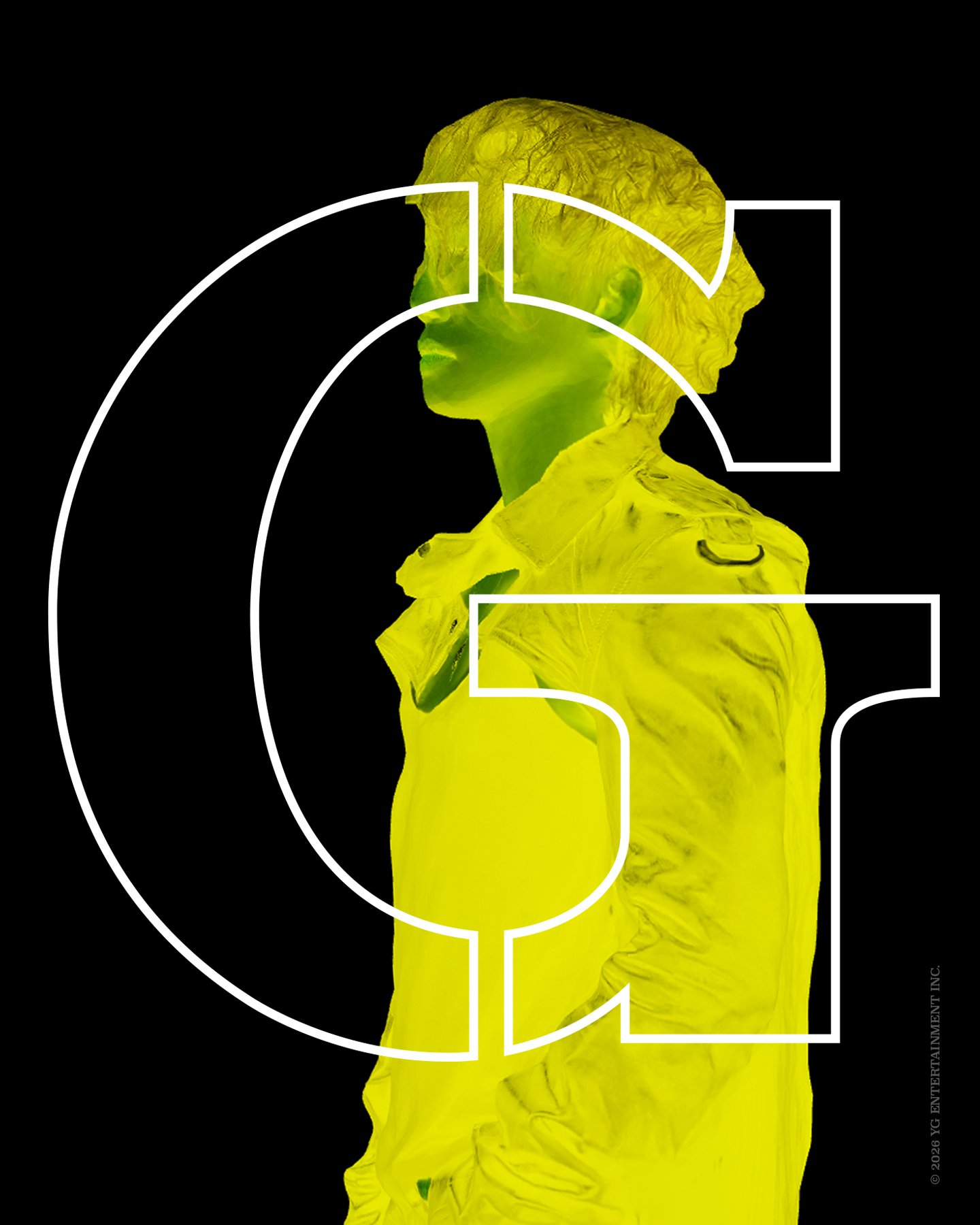
On August 19, the exact day of their twentieth anniversary, the new digital single “BiiiG” arrives. It is their first new song in more than four years, since “Still Life” in 2022. The title comes from the English word “Big,” carrying the group’s own name forward.
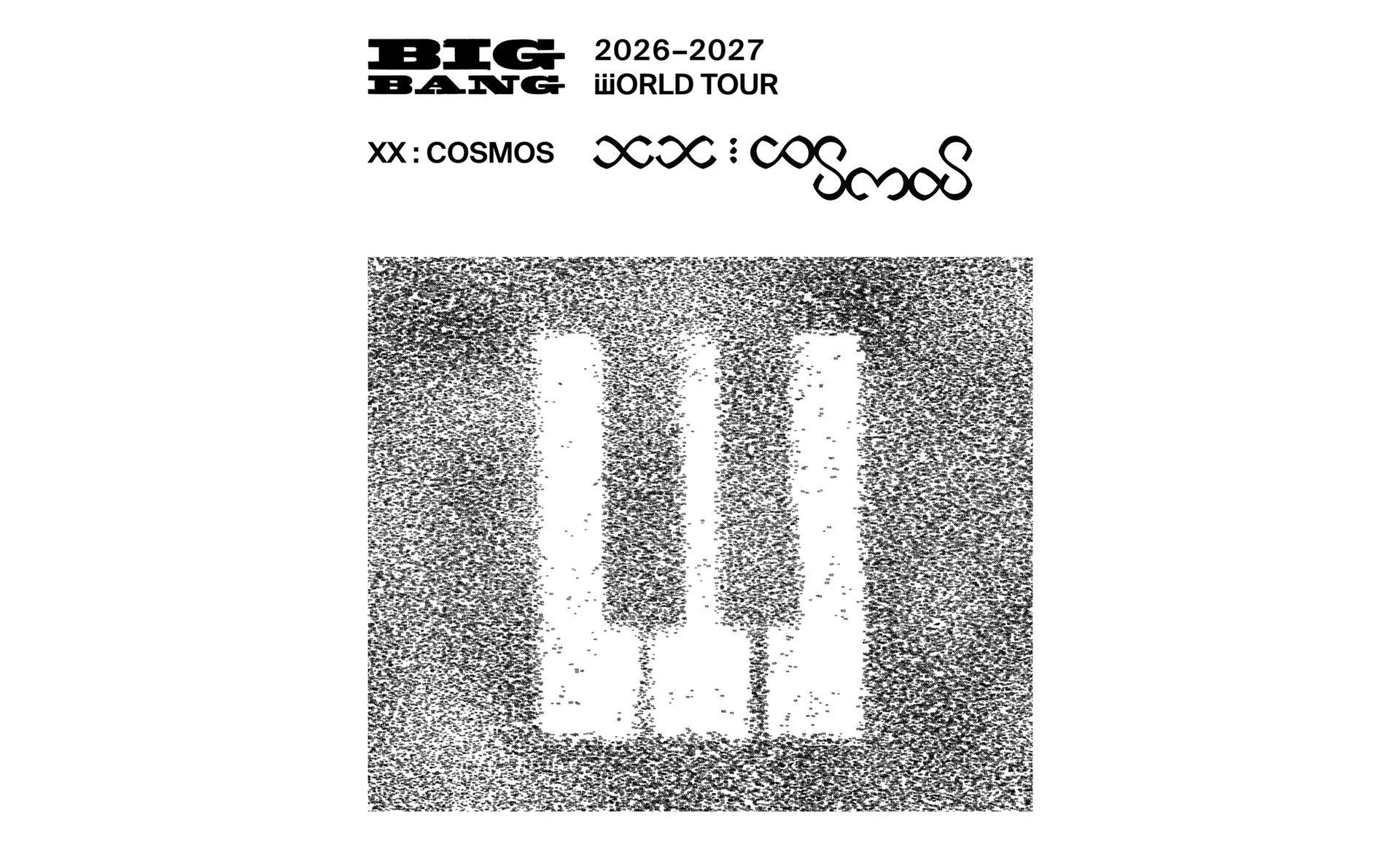
Two days later, from August 21 to 23, the world tour XX : COSMOS opens at Goyang Stadium. In the tour title, “XX” stands for twenty years, and “COSMOS” points to the connection sustained across that time. The schedule runs through to Kaohsiung, Taiwan, on February 28, 2027, and the confirmed scale currently stands at 33 shows across 19 cities.
Something marking the anniversary is also underway off the stage. From August 14 to 23, the eastern side of Seokchon Lake in Seoul is being dressed in yellow, BIGBANG’s signature color, with a five-meter crown sculpture installed on the lakeside stage. Four hundred yellow lights line the walking path, and 21 of the group’s signature songs play along it, including “Lies,” “Haru Haru,” and “BANG BANG BANG.” It is a public art project hosted by YG Entertainment and Lotte Department Store with support from Songpa District, and it is the first time this lake has taken K-pop as its subject.
A crown that began as a lightstick stands in a lake as a five-meter sculpture twenty years later.
Two meanings overlap in this tour: it is the first world tour run as a three-member group, and the first headlining world tour in nine years, since 2017. In between, the three of them kept making music from their own positions. TAEYANG released his first studio album in about nine years this past May, while G-DRAGON and DAESUNG continued solo work under their respective labels.
Twenty years ago, this was a team that did not fit the standard. They said they would write their own songs, said they would each take the stage instead of matching choreography, and drew their own lightstick. Back then that read as falling short of spec. Today those choices sit close to the default settings of K-pop.
What kind of song arrives on August 19 is still unknown. But a group that picks the same date it debuted to release new music in its twentieth year is not a common thing, and that choice alone says something about how they handle time.