
In May 2008, SM Entertainment introduced a new five-member boy group with a phrase that did not belong to idol groups: “contemporary band.” They were not a band. And the explanation of what the phrase meant was not a long one. A SHINee review starts here because the 18 years that followed were spent filling in that phrase, one piece at a time.
Eighteen years later, in June 2026, the sixth mini album Atmos reached No.1 on the iTunes Top Albums chart in 28 regions and entered the Top 10 in 44. The group whose debut mini album Replay sold 32,171 copies posted 393,553 for its most recent studio album. In between, in March 2015, they played their first solo concerts at Tokyo Dome across two nights. What they did over those 18 years was not hold on to a position that worked. It was to change their own sound first, every time.
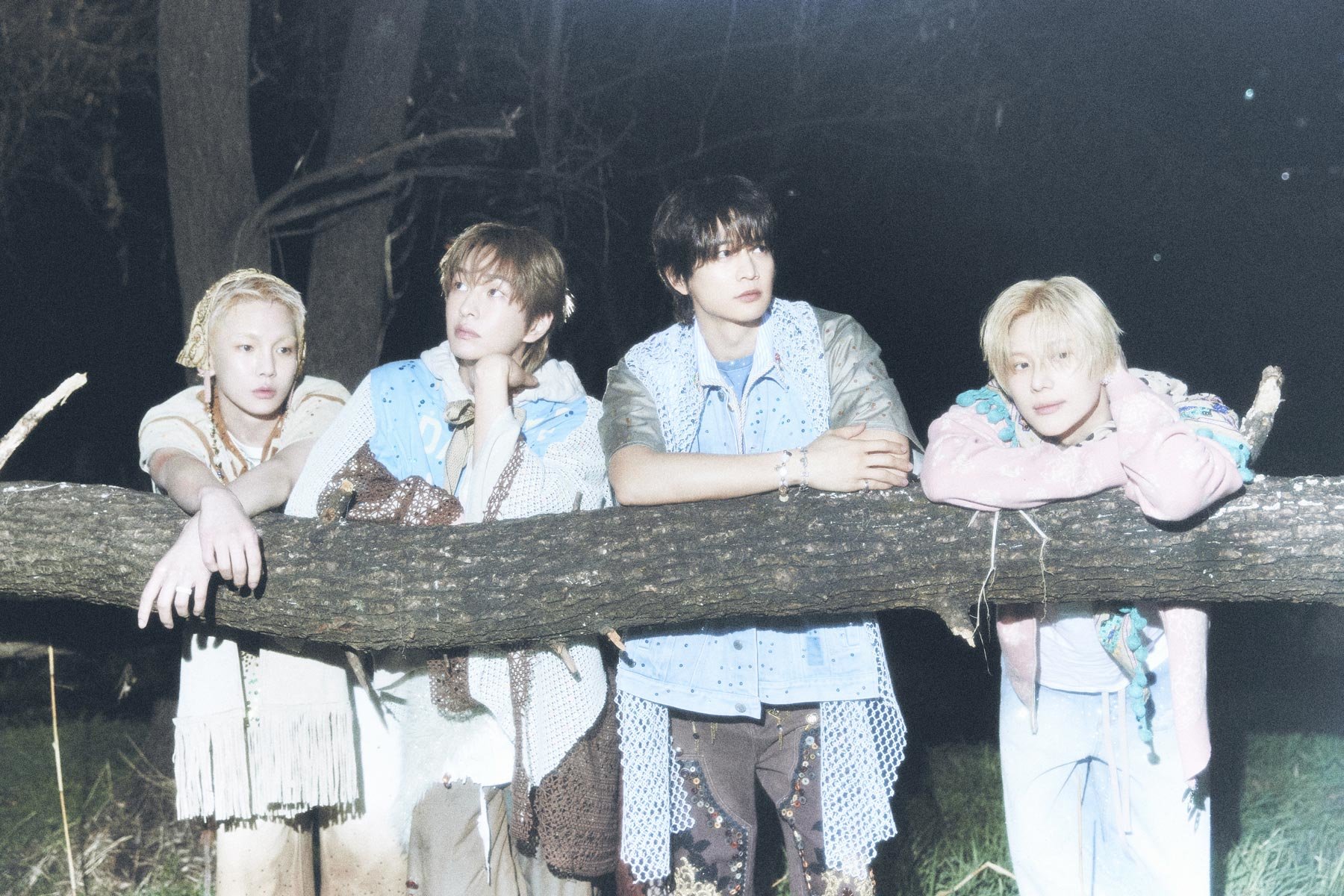
1. The Team That Changes Its Sound First
Listen to SHINee’s discography in order and it reads less like one group’s record than like a timeline of K-pop sound. They started in R&B and dance pop, moved to deep house in 2015, to a reworking of retro sound in 2016, and to hip-hop in 2023.
Table 1. SHINee’s major shifts in sound
| Release | Album | Direction |
|---|---|---|
| 2008 | Replay | R&B and dance pop |
| 2012 | Sherlock | New jack swing and hip-hop |
| 2015 | Odd | Deep house |
| 2016 | 1 of 1 | Retro sound reworked |
| 2023 | Hard | Hip-hop |
What stands out in this list is not the range of genres but the order. When “View,” the title track of 2015’s Odd, came out, the boy group market was dominated by hard electronic sounds. They chose deep house, built around open space. This looks less like following a trend than like moving before the trend arrived.
The clearest case of how this team handles sound is the 2012 mini album Sherlock. The title track, “Sherlock (Clue + Note),” is exactly what its name says: two songs merged into one. “Clue” carried the new jack swing and hip-hop instrumental, “Note” carried the vocal-driven chorus, and the two were taken apart and reassembled into a single track. It is on record as K-pop’s first hybrid remix, and the American music magazine Rolling Stone cited it as an example of how experimental K-pop can be.
The production was not on a routine scale either. Around 30 people from SM Entertainment’s A&R department reviewed more than 100 candidate songs before selecting the two. One song came out of a hundred.
Putting an unfamiliar sound out first and waiting for the market to catch up is a pattern that repeats with a younger group at the same agency. NCT 127’s ten years, which drew comments early on that their sound was unfamiliar, sit in that same line.
The One Who Wrote the Songs
The member who drove this team’s music from the inside was Jonghyun. By Wikipedia’s count he took part in writing or composing 80 songs, and he is regarded as the first SM idol to be substantially involved in producing an album.
His lyrics carry traces of someone playing with structure. “Spoiler,” the opening track of the 2013 third studio album, is exactly what the title suggests: the titles of the songs on an album that would be released in two parts were hidden inside its lyrics in advance. “View,” from 2015, was his writing as well.
He also made music away from the stage. For about three years, from February 2014 to April 2017, he hosted a late-night radio program on MBC FM4U, taking stories sent in by listeners and turning them into lyrics and songs to play on air. He did the work of listening to someone’s story and making a song out of it on a regular schedule.
On December 18, 2017, he died. In January of the following year, the remaining members said in handwritten letters that they would continue under the name SHINee.
On May 25, 2025, marking the group’s 17th anniversary, the single album Poet | Artist was released. The title track was one he had written and composed while he was alive, and his demo vocals are on the recording as they were. The title is the same as his posthumous album from 2018, and the packaging follows that album’s design. It sold 309,641 copies.
Finishing a song may have meant facing what was inside him. Songs made that way have helped people get through hard times. As one of those people, I am leaving a belated thank-you here.
2. Choreography That Made Five People Look Like One
What makes Sherlock interesting is that what it did in the music and what it did in the choreography come from the same idea.
The choreography was created by the American choreographer Tony Testa. It was his first K-pop project, and he finished it in ten days while moving between Korea and the United States. He drew the idea from the shadow effects in the film The Matrix, and the goal was to make five people on stage look like one person.
The song merged two tracks into one. The choreography made five people read as one. Within a single album, the music and the performance solved the same problem in their own ways. This is the point where choreography in K-pop stops being an accessory to a song and becomes something designed at the same level as the song itself.
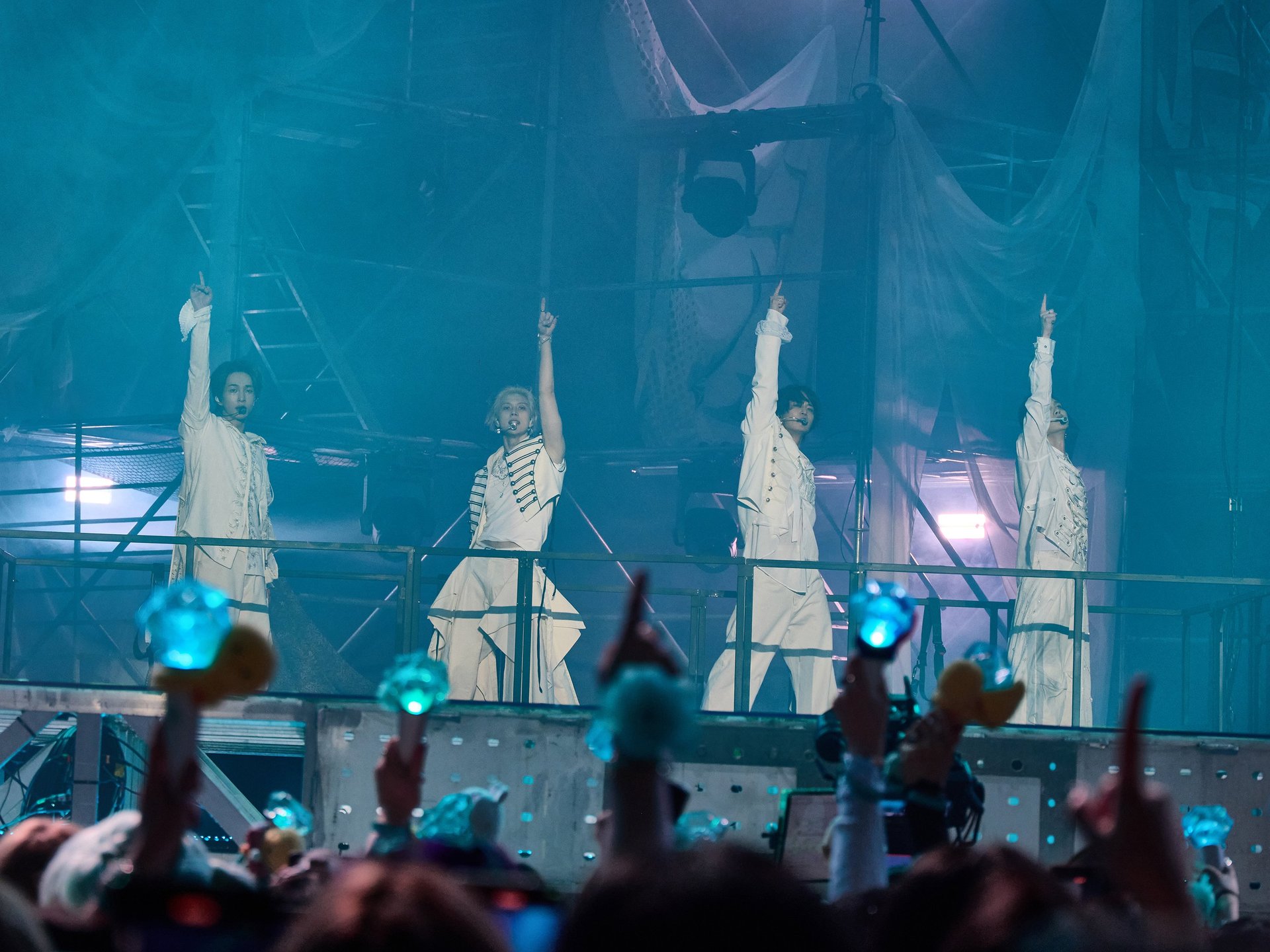
The choreography for the 2013 mini album Everybody has the same character. It translates a wind-up toy soldier into movement, with the steps linked so that one member appears to be operating another. The mechanical rhythm of the song and the concept of the music video repeat once more on stage.
3. They Design Album Structures, Not Just Albums
This team does not have what is usually called a fictional universe. What they have instead is something else. They design how many parts an album will be split into, in what order those parts arrive, and what the parts become when combined.
The 2013 third studio album is the clearest case. It was released as two albums, Chapter 1: Dream Girl – The Misconceptions of You and Chapter 2: Why So Serious? – The Misconceptions of Me, and then reissued as The Misconceptions of Us, which combined them. The first deals with misconceptions directed outward, the second with misconceptions about oneself, and the combined edition makes them one. The song placed at the entrance to this structure is “Spoiler,” mentioned above. Because the track titles of both albums are hidden in its lyrics, a listener has already passed the full table of contents by the end of the first song.
The 2018 sixth studio album The Story of Light moved this method into color. It was released as three EPs, each cover carrying one of the three primary colors of light, and the epilogue album that combined them was finished in white. That overlapping all three primary colors produces white was implemented through the release order itself. Here cover design is not an accessory to an album but part of the narrative.
Not fixing an identity to one thing shows up in another form at the same agency. Red Velvet’s trajectory, where swapping concepts every time became the identity itself, works that way.
4. What Held 18 Years Together
For a team that has kept going for 18 years, the question worth asking is less what they did than how they continued.
There were long stretches when this team could not stand together. Beginning with Onew in December 2018, the members stopped activities one after another for military service, and the last of them, Taemin, returned in April 2023. Then, from 2024, each member came to be with a different agency. Onew moved to Griffin Entertainment and Taemin to Galaxy Corporation, while Key and Minho renewed with SM Entertainment.
Line up the titles of the solo debut releases they each put out during that period and something else appears. It starts with Taemin’s ACE in 2014, then Jonghyun’s BASE in 2015, Key’s FACE and Onew’s VOICE in 2018, and Minho’s CHASE in December 2022. Across eight years, these were albums each of them released alone, and yet whoever came next picked up the title of the one before. Minho, who came last, said he kept the connection to the earlier releases in mind while preparing his own.
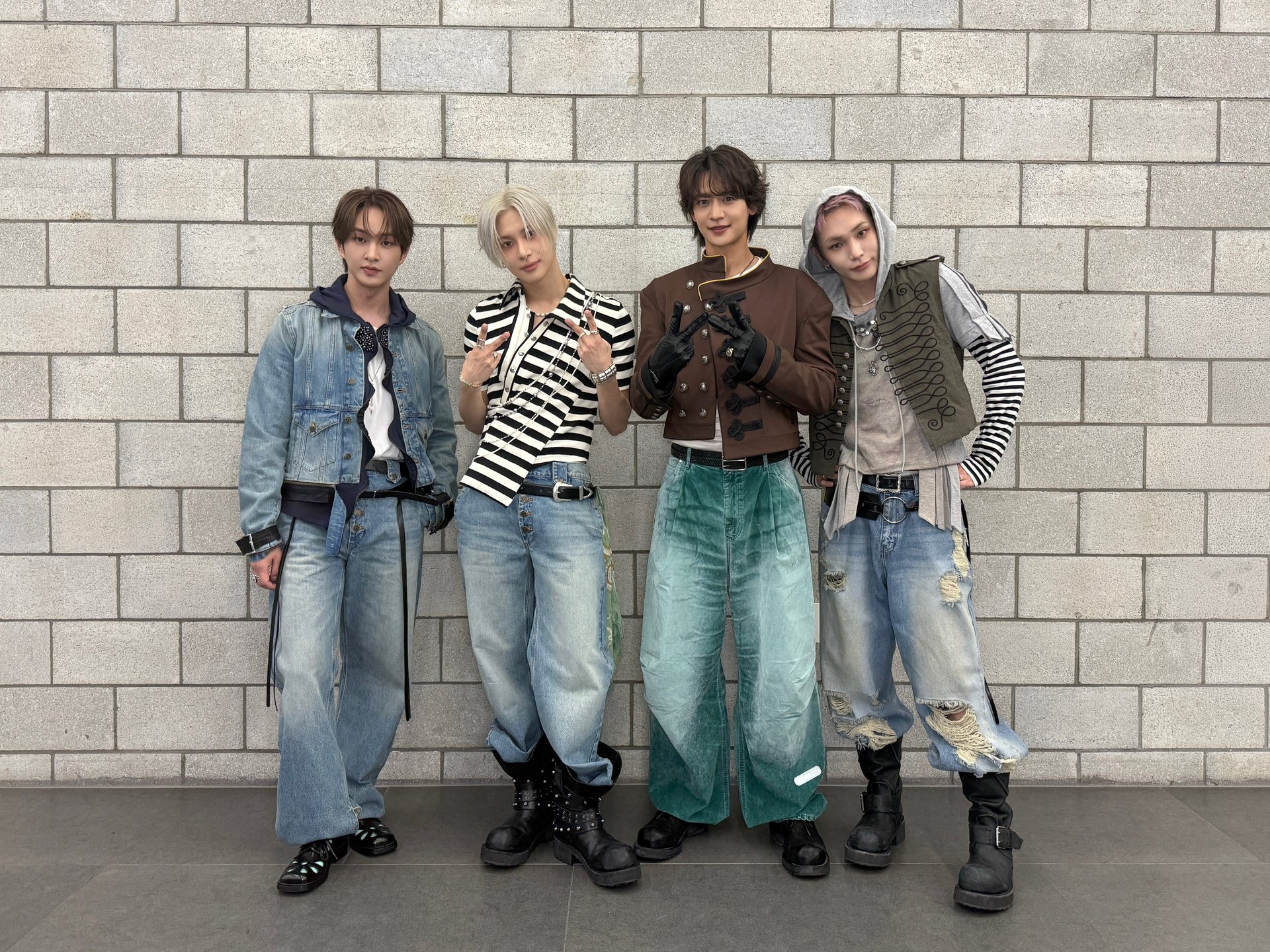
Standing together did not stop after the agencies split, either. In May 2025 they held a 17th anniversary concert over three days and released the single album Poet | Artist. In 2026 they continued a three-day run from the end of May and released Atmos in June. That is two years running since the split.
In K-pop, members ending up at different agencies has long been read as a signal that a team is finished. This team is building a case that the equation does not necessarily hold. Even while they were scattered, this team went on being a team. Set alongside the case of BIGBANG, which reached 20 years in the same generation, it shows that long-running teams have each found their own conditions for continuing.
5. And Now
On June 1, 2026, timed to the group’s 18th anniversary, the sixth mini album Atmos arrived. It carries six songs, and the agency described it as the work where this team’s own color comes through most clearly.
The results came in right after release. On the iTunes Top Albums chart it took No.1 in 28 regions, entered the Top 10 in 44, and topped the Worldwide Album Chart. In Japan it reached No.1 on the Oricon Weekly Digital Album Ranking for the first week of June. In Korea it sold 152,863 copies.
At the same time, each of them is moving in his own lane. Solo albums and tours, acting and broadcast work run member by member, and those activities turn alongside the group’s schedule. The present tense of a team in its 18th year is not a choice between the full group and individual work. It is both, side by side. One of those lines is Taemin’s, which reached the point where he plans and produces an entire album himself.
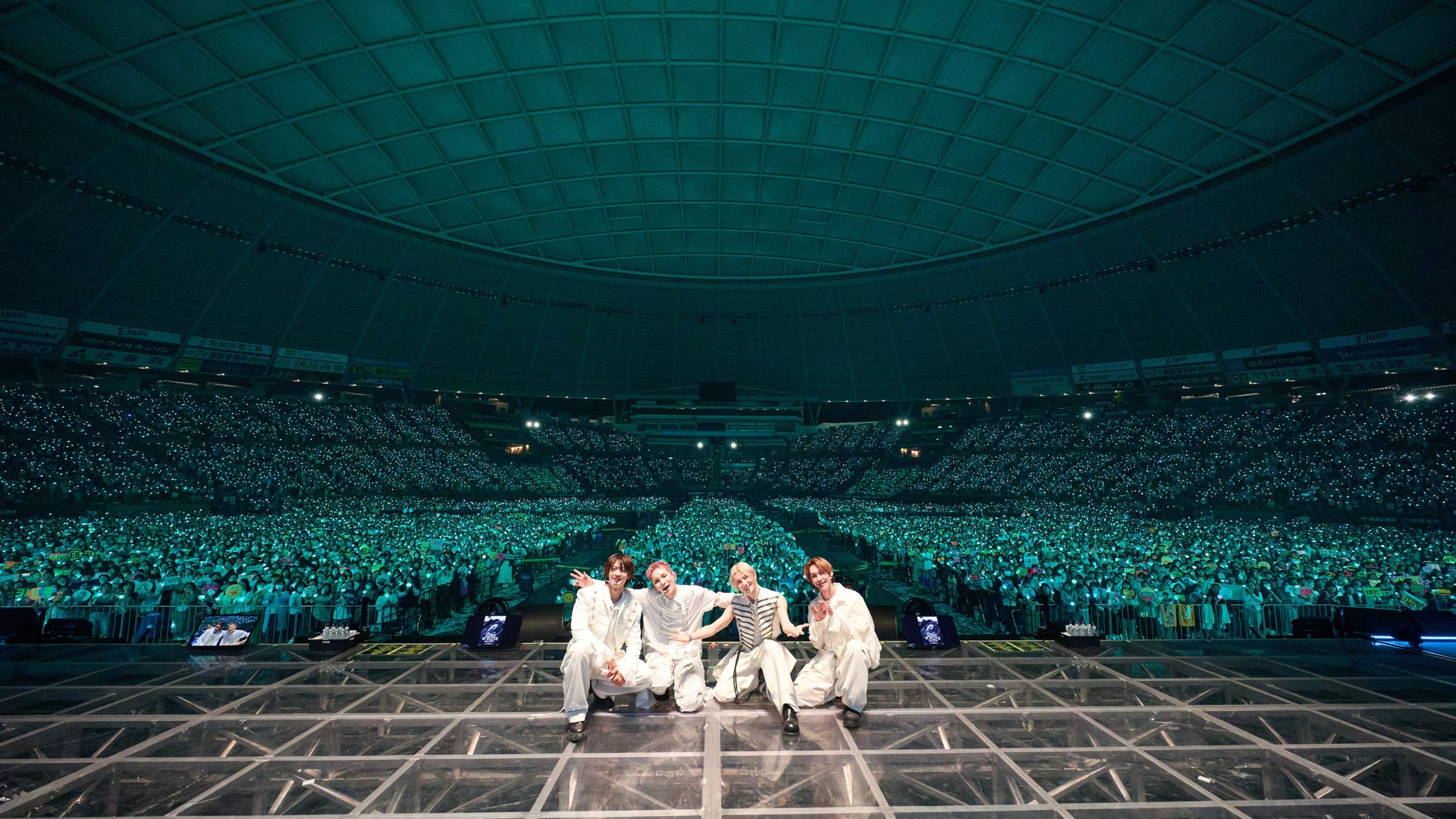
Go back to that 2008 introduction and “contemporary band” turns out not to be the name of a genre. It was closer to a declaration that they would keep asking, each time, what the sound of the moment is. Over 18 years this team asked that question more than six times over, and changed the answer each time.
So what the next album will sound like is hard to predict right now. That it cannot be predicted may be the most accurate sentence available about this team.